
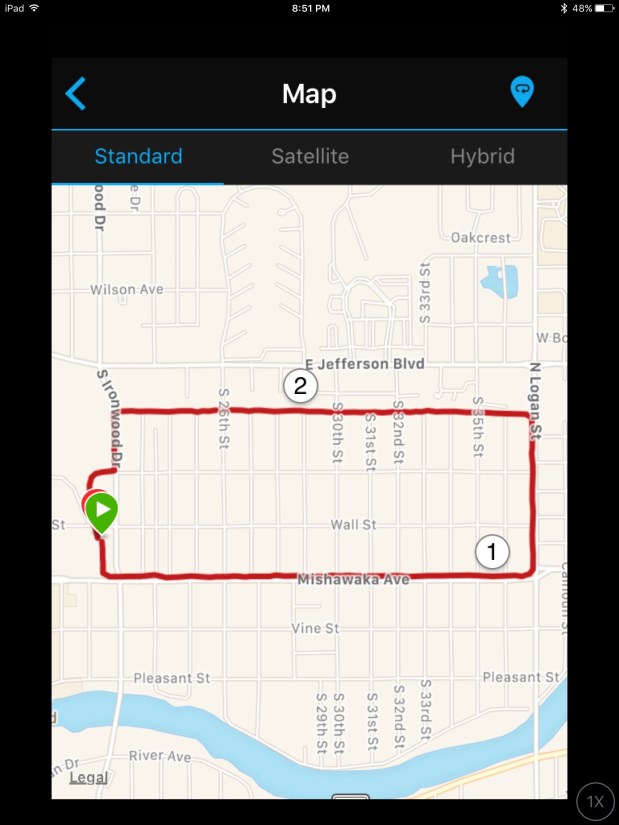
Today I had the opportunity to lead another neighborhood prayer walk as we asked God to make Himself known and to pour out His blessing upon the community. I enjoy leading prayer walks because it gives me the opportunity to teach about developing a lifestyle of prayer in a practical context.
The context behind a prayer walk is really not that complicated — you walk and you pray. Praying on-site in a neighborhood, workplace, school, or anywhere else can help you learn to pray more effectively as you pay attention to what is really going on. Yes, I can pray for a neighborhood from anywhere, but when I walk the sidewalks and observe with my eyes, ears, heart, spirit, emotions, and anything else available to me, I often pray about things that I would never otherwise even think about.
For me, prayer walking is a practice that helps me apply God’s command to “pray without ceasing.” When I make a deliberate effort to pray, I find that I am constantly looking for things to pray about that would be meaningful in my conversations with God. I might notice a home health care van parked in front of a house and pray for the person needing extra care. I walk past an auto body shop and pray for those whose lives have been impacted in situations represented by the assortment of wrecked vehicles waiting to be repaired. I walk by a park and pray for the families and children who will come and play. I walk past a school and pray for the safety of all who are there each day. And the list goes on . . . it seems that each house or property has something to say that would lead me to pray in a specific way. Yet even in the specific prayers, I keep in mind the greater context that God would bless the neighborhood in ways that would make Himself known.
Tonight’s prayer walk was the first I had focused on the neighborhood I was in. Depending on time available, my first prayer walk in a neighborhood is usually a perimeter walk as I surround an area with prayer. Follow-up walks would then work my way up and down each street, asking God to help me notice the things I ought to see.
In case you’re wondering, I’m not writing this to try to say, “Look what I did!” No, I’m writing this in an attempt to say to you who are reading, “Look what you could do!”


 Tom's Treasure